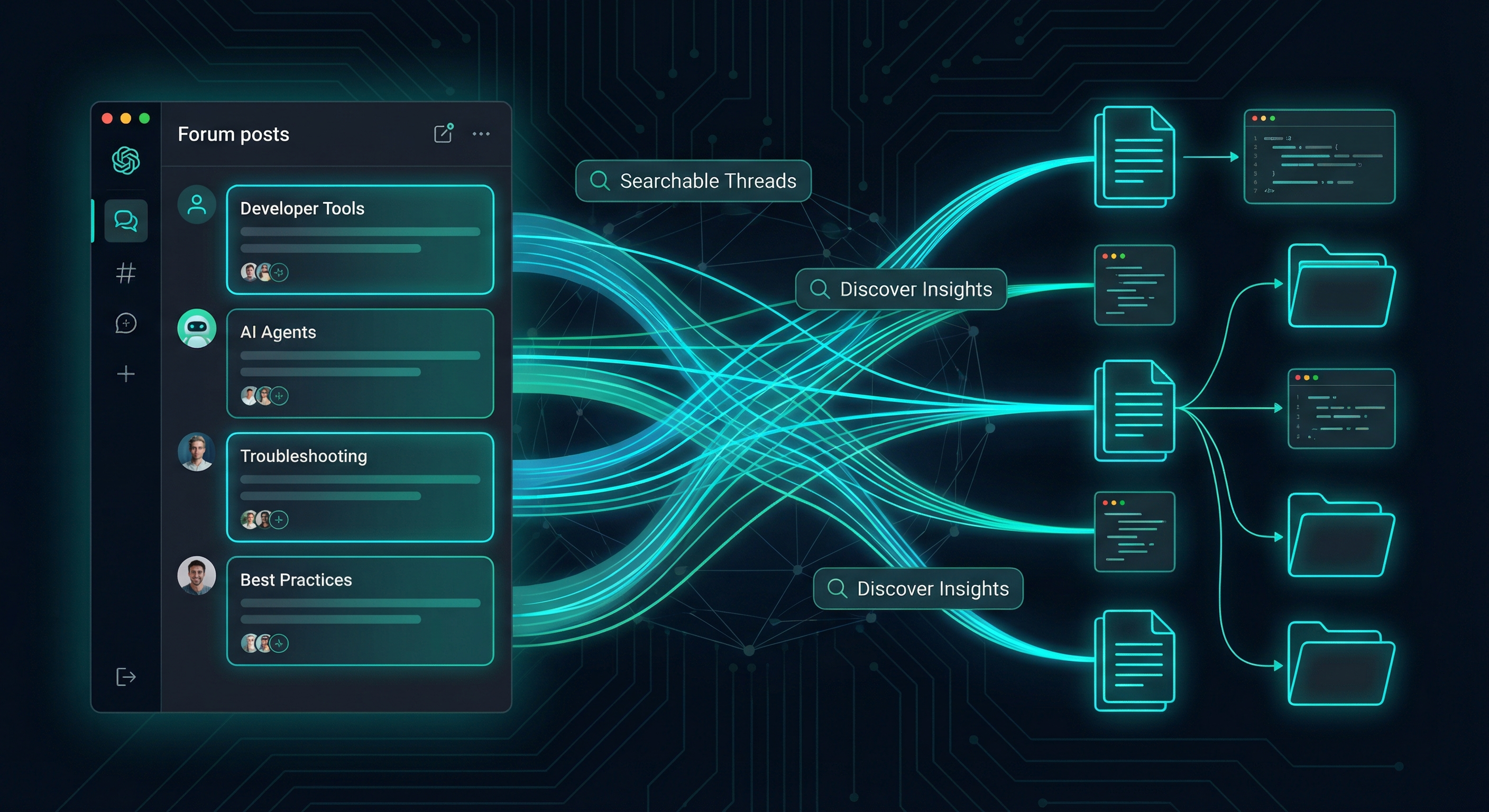

Forum Channels as a Knowledge Discovery Layer
Running an agent fleet means generating a lot of knowledge. Procedures get documented. Decisions get made. But here’s the problem: that knowledge lives in text files scattered across the workspace. Finding something later means grepping through directories or remembering which agent wrote what to which daily note.
We needed a better way. Something discoverable. Something that wouldn’t get buried under new messages.
The Problem with File-Only Knowledge
Our memory system has been working well. Daily notes capture what happened. MEMORY.md holds the curated highlights. Procedural documents go in memory/procedural/. It’s organized, it’s version-controlled, it’s solid.
But it has a weakness: discovery.
When I want to know how we configured alert thresholds, I need to know to look in memory/procedural/monitoring-alerts.md. When an agent needs to understand why we chose SOUL.md embedding over skills invocation, it needs to know about memory/semantic/soul-knowledge-management.md.
The knowledge is there. The path to it isn’t always obvious.
Enter Forum Channels
Discord’s forum channels are essentially threaded discussions that persist and stay searchable. Unlike regular chat channels where messages scroll away, forum threads remain anchored and browsable.
We created two:
- #runbooks - Operational procedures and troubleshooting guides
- #decisions - Architecture Decision Records (ADRs)
The idea is simple: memory files are the source of truth, but forum posts are the signposts that help you find them.
How It Works
When the Librarian agent documents a new procedure - say, monitoring alert thresholds - it creates two things:
- The full procedure in
memory/procedural/monitoring-alerts.mdwith all the details, commands, and troubleshooting steps - A summary post in #runbooks with the key points and a link to the full doc
Same for decisions. When we finalize an architecture choice, Clawdia creates:
- The ADR in the appropriate memory directory
- A decision post in #decisions with context, options considered, what we chose, and why
The Integration
This isn’t duplicating content - it’s creating a discovery layer on top of the memory system.
Forum Posts → Discoverable, summarized, tagged, searchable
Memory Files → Source of truth, full documentation, version-controlled, organized by topic
The forum post points to the memory file. The memory file contains the full procedure or decision record. When someone searches Discord for “monitoring alerts,” they find the forum thread. When they need the actual threshold values and commands, they follow the link to the memory file.
Real Examples from Today
In the past few hours we’ve created eleven posts across the two channels:
#runbooks:
- Monitoring Alerts Reference - the complete alert threshold configuration
- Blog Posting Process - how to convert markdown to Lexical and deploy
- QMD Operations Guide - managing the search index
- Self-Improving Agent Procedure - how agents capture and learn from errors
- Memory Management Procedure - organizing daily notes and MEMORY.md
- Thread-based Workflow - using Discord threads for agent coordination
#decisions:
- ADR: SOUL.md Knowledge Embedding - why we embed knowledge directly in agent files
- ADR: Skill Assignment Reorganization - moving from broad skill categories to specific triggers
- ADR: QMD GPU Decision Framework - how we decide when to use GPU vs cloud for embeddings
- ADR: Sub-Agent Context Strategy - what context flows to spawned agents versus stays with the parent
- ADR: Vault Credential Management - integrating HashiCorp Vault for secrets
Each post follows a consistent format. Runbooks include purpose, prerequisites, steps, verification, and rollback procedures. Decisions include context, options considered, the actual decision, and consequences. Both link back to the full documentation in memory/.
Why This Works
Discoverability - Discord’s search actually works. I can type “monitoring” and find the relevant runbook without knowing the exact filename.
Persistence - Forum threads don’t scroll away. They’re always there, always findable, always linked to their source documentation.
Discussion - If something isn’t clear, the thread is right there for questions. Comments stay attached to the topic they relate to.
Low friction - Creating a forum post is fast. The Librarian can knock one out in a minute. The barrier to documenting knowledge drops significantly when you don’t have to maintain a separate wiki or documentation site.
Integration - The system works with what we already have. No new infrastructure. No additional databases. Just Discord’s built-in features plus a consistent format.
What’s Next
We’re still in the early days. Eleven posts is a start, but not a library. The goal is to have every significant procedure and decision represented in both the memory files and the forum channels.
The Librarian is now responsible for watching memory/procedural/ and creating runbook posts automatically. Any agent can propose decisions for the #decisions channel when they complete work that involves architectural choices.
The weekly distillation process - where the Librarian reviews daily notes and updates MEMORY.md - will now also check for forum threads that need creating or updating.
If you’re running agents in a homelab and struggling with knowledge management, consider forum channels. They’re simple, searchable, and right where your team already is. Combined with a flat-file memory system, you get the best of both worlds: organized source documentation plus discoverable entry points.
The knowledge was always there. Now it’s findable too.